
The Cello's Other Classical Tradition
The cello belongs to at least two classical traditions. Discover its place in Morocco's Andalusi orchestras. Morocco's entry in my World Cup tribute series.
WORLD CUP TRIBUTE SERIES
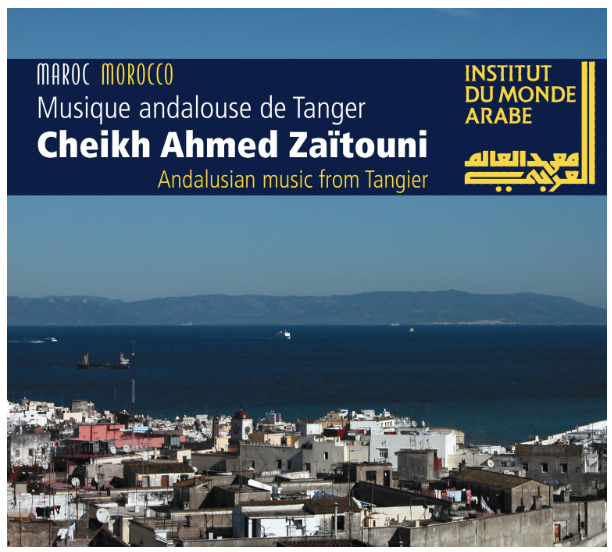
Here is a question I like to spring on students: how many classical traditions does the cello belong to? The expected answer is one. The correct answer is at least two, and the second one lives in Morocco.
Moroccan al-Āla ("the instrumental art") is the classical music of the Arab-Andalusi tradition: a repertoire that traces its lineage to medieval Muslim Spain, carried to North Africa over centuries of exchange and, finally, by the refugees of the Reconquista. Its legendary founding figure is Ziryab, the ninth-century Baghdad-trained musician of the Córdoba court. The tradition's core form is the nūba, a monumental vocal-and-instrumental suite; each nūba inhabits a single mode, or ṭab', and unfolds through five movements (mīzān), each with its own rhythmic cycle, from stately opening to ecstatic finish. Legend holds there were once twenty-four nūbāt, one for each hour of the day; eleven survive in Morocco, preserved almost entirely by oral transmission and taught today in conservatories in Fez, Tetouan, Tangier, and beyond. A complete nūba can run for hours; performances usually present a single mīzān, and even that is a substantial journey.
Now, the part that concerns us. The traditional ensemble centers on the rabāb (a bowed relative of the rebec, and an ancestor of our whole bowed-string family), the oud, and percussion. But in the twentieth century, Andalusi orchestras began to absorb European instruments, first the violin and viola, then, remarkably, the cello, which is now a fixture in many ensembles. Look at the roster of Tangier's celebrated orchestra under the late master Ahmed Zaïtouni, and you'll find two cellists listed alongside the rabāb and ouds. These cellists play the same instrument we haul to lessons, but inside a musical system where correctness is defined by the ṭab' and the ear, not by a piano or a tuner. Intonation is modal and flexible; ornaments and heterophonic variation are expected; the music was never written down in the first place.
I find this genuinely liberating to think about, and I suspect students do too. We tend to teach intonation as a binary, in tune or out of tune, when it is really a question of in tune with respect to what? The Moroccan cellist tuning a phrase to the ṭab' and the Toronto cellist tuning a third against an open string are doing the same act of listening within different reference systems. Neither is a compromise of the other.
Listen
Orchestra of Tangier (dir. Ahmed Zaïtouni), Nūba al-Hijāz al-kabīr — details and audio notes: https://www.arabosounds.com/en/andalusian-music-from-tangier/
Interview on NPR: Maya Beiser Returns The Cello To The Middle East
Sources and further reading
Wikipedia, "Andalusi classical music" — https://en.wikipedia.org/wiki/Andalusi_classical_music
Arabosounds, "Andalusian music from Tangier" — https://www.arabosounds.com/en/andalusian-music-from-tangier/