
Lise Cristiani's Stradivarius Goes to Siberia
At 19, Lise Cristiani defied convention as a female cellist in 1840s Paris, then carried her Stradivarius to Siberia. From my World Cup tribute series.
WORLD CUP TRIBUTE SERIES
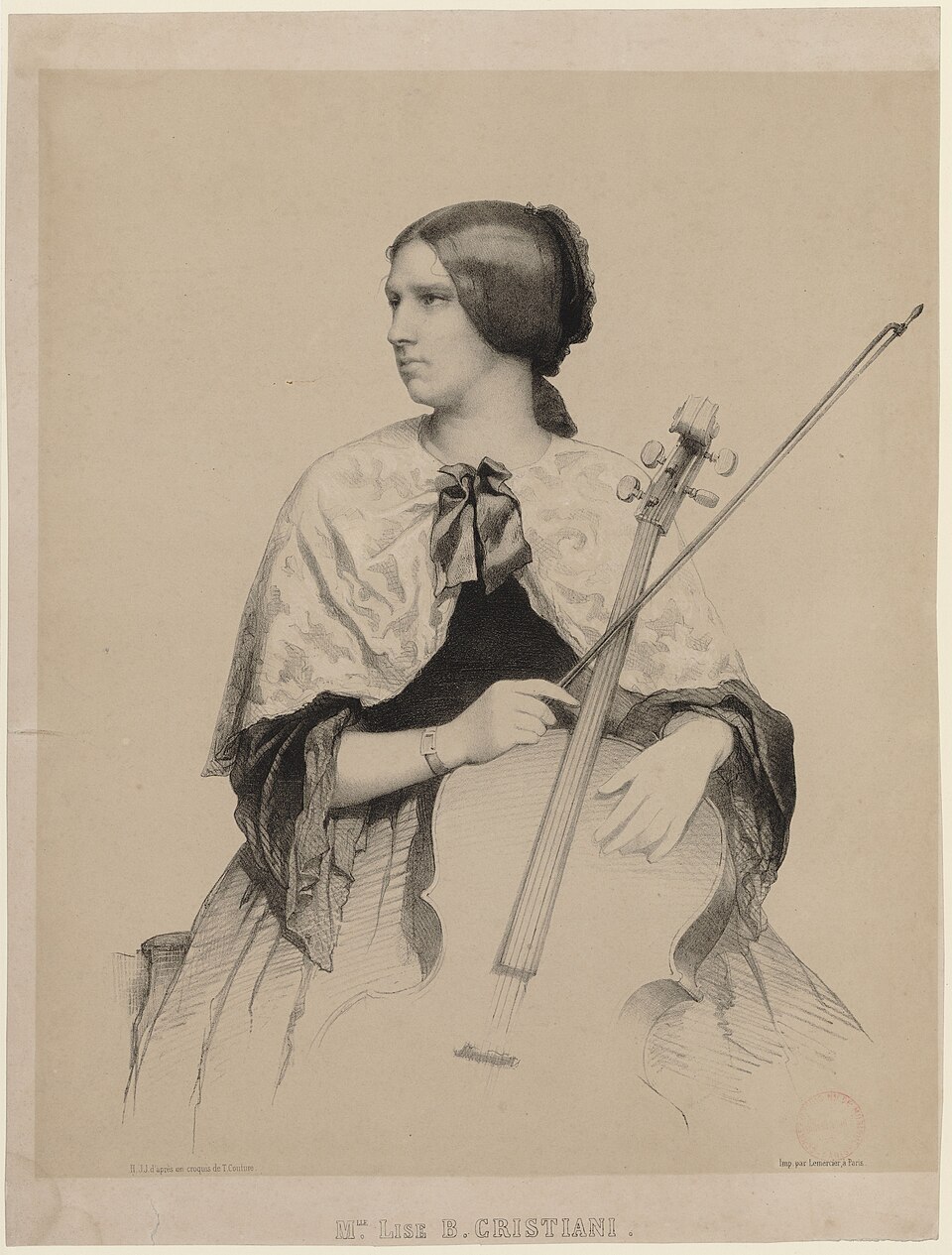
France gave the cello world Duport, Franchomme, Fournier, and Tortelier. It also gave us someone few people remember, and she may have been braver than all of them combined.
In 1845, a nineteen-year-old Lise Cristiani walked onto a Paris concert stage with a cello, and that alone was scandalous. In the 1840s, a woman playing the cello was considered improper: the posture, legs astride the instrument, was thought unladylike. Proper young women sat primly at the piano. Cristiani, orphaned young and trained first in voice and piano, switched anyway. She is generally considered the first woman to build a professional career as a solo cellist.
Her debut was a sensation. Within a year, Felix Mendelssohn heard the young cellist play in Leipzig and was impressed enough to write his only Lied ohne Worte for cello and piano, Op. 109 and dedicate it to her.
Then the story gets stranger. After touring Germany and Scandinavia, Cristiani grew tired of aristocratic salons and critics. She called the critics pedantic and decided she wanted to play for people who had never seen a cello before. In 1849, she headed east. Way east. She became the first Western musician to cross Siberia, giving the first documented concerts in remote cities all the way to Petropavlovsk on the Kamchatka Peninsula, a journey of roughly 19,000 kilometers, much of it by sled over frozen rivers, in temperatures down to −40°C. Her traveling companion was a 1700 Stradivarius, wrapped in wolf pelts in a lined metal case; she called the instrument her "lord Stradivarius." Her travelogue includes an account of a blue whale surfacing beside her ship in the Pacific. On the journey home, she performed in Ukraine and the Caucasus before dying of cholera in 1853, at just 27.
Two footnotes make this more than a great yarn. First, several scholars credit Cristiani as an early popularizer of the endpin, the spike we now consider standard equipment, which was, for her, partly a solution to the social problem of how a woman could hold the instrument at all. Second, her cello survived her. With her name carved into its side, the "Cristiani" Stradivarius passed to cellist Hugo Becker and eventually returned home to Cremona, where you can view it today at the Museo del Violino. In a lovely full-circle moment, cellist Sol Gabetta recently retraced Cristiani's journey for a documentary film and played the instrument itself.
Listen
Mendelssohn, Lied ohne Worte, Op. 109 [Sol Gabetta]
The documentary Sol Gabetta and Lise Cristiani, Virtuoso Cellists and Intrepid Travellers (Arte, 2024), in which Gabetta plays the Cristiani Strad in Cremona.
Sources and further reading
Classic FM, "Lise Cristiani: the world's first female cellist" — https://www.classicfm.com/discover-music/instruments/cello/lise-cristiani-first-female-cellist/
Wikipedia, "Lisa Cristiani" — https://en.wikipedia.org/wiki/Lisa_Cristiani
The Lise Cristiani research project — https://www.lisecristiani.com/en and https://lise-cristiani.com
Kate Kennedy, Cello: A Journey Through Silence to Sound (Pegasus, 2024), a group biography featuring Cristiani
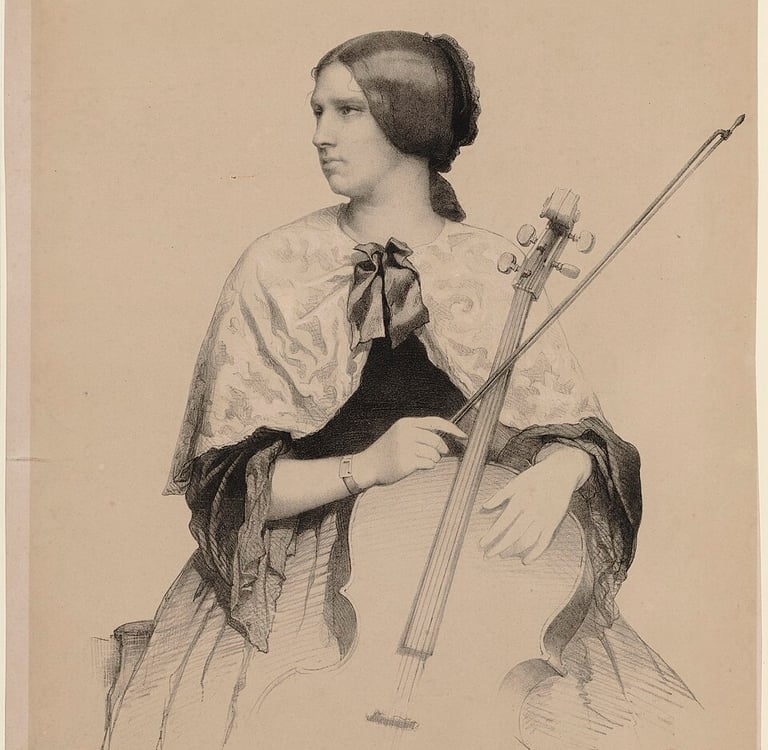
Portrait of Lise Cristiani, lithography by H. J. J. (after a sketch by Thomas Couture). Source: Wikimedia Commons / Public Domain.